Insects use antibacterial secretions to protect young

Scientists have confirmed that so-called burying beetles coat their young’s food with an antibacterial substance to guarantee their survival.

Burying beetles lay their eggs on the carcasses of small animals, such as birds and rodents.

The researchers show that without the anti-microbial secretions the young fail to gain weight and die.

The results were presented the 13th Congress of the European Society for Evolutionary Biology.

Most animals try to do the best for their young, but burying beetles, in the genus Nicrophorus, which are found in temperate regions in Europe and North America, are truly doting parents.

As a prospective parent, burying beetles find a dead animal, such as a mouse or bird, and roll the carcass into a ball.

They then bury the carcass, hiding it from predators that might eat it or fancy it for a nursery for their own young – no small feat for a beetle that is only 15mm long.

The beetles then lay their eggs in the flesh of the animal and wait to welcome their young into the world.

But a buried carcass is not going to stay fresh for very long, and the bacterial communities that colonise it are likely to threaten the beetle’s developing larvae.

Germ-free

So burying beetles use secretions from their anal glands to coat the fur or feathers with substances that guarantee the carcass stays germ-free and fresh for longer.

Now scientists from the University of Manchester have worked out what makes these secretions so good at killing germs.

The researchers extracted secretions from the anal glands of a species of burying beetle called Nicrophorus vespilloides, and showed that when this substance was added to bacterial cells, they were destroyed.

Evolutionary biologists Andres Arce, who led the study, and his colleagues, suspecting that they were dealing with a enzyme that “chops up microbial cell walls”, investigated and confirmed that the secretions were rich in lysozymes.

These are anti-microbial enzymes, and a common component of animals’ immune systems.

Lysozymes are also secreted in mammals’ breast milk and in human tears.

The team showed that larva raised in the absence of either their parents secretions were 40% more likely to die before adulthood.

Dr Arce explained that for a non-social insect, these burying beetles are already known to show quite substantial levels of parental care.

:: Read original here ::
Lager-brewing yeast identified in Argentina

Scientists have identified a yeast that led to the discovery of lager.

The researchers isolated the new species in the frozen forests of Patagonia in South America.

Their discovery suggests that this yeast crossed the Atlantic hundreds of years ago and combined with one traditionally used in Europe to make ale.

The discovery is described in the Proceedings of the National Academy of Sciences.

A lucky find

The workhorse of brewing, the yeast Saccharomyces cerevisiae, is used worldwide to ferment fruit and grains to make wine, cider and ale.

Lager, which is fermented more slowly and at lower temperatures than ale, is presumed to be a later invention, and was likely stumbled upon when Bavarian monks moved their beer barrels into caves for storage.

In those caves, Saccharomyces cerevisiae, which prefers to grow just above room temperature, is presumed to have been outcompeted in the fermenting beer by a species that thrived at cooler climes.

The modern-day lager-brewing yeast, Saccharomyces pastorianus, which is a fully domesticated species, is probably a hybrid of this cool-loving strain and the ale-brewing species, and survives because brewers keep back a little of the lager each time to seed the next batch with the same yeast.

Lager’s cradle

“The hybrid almost definitely formed accidentally and people adopted it because the beer came out differently,” said evolutionary biologist Chris Hittinger from the University of Wisconsin in Madison, US, who was one of the team behind the discovery.

But researchers have long wondered where the original cool-loving yeast species came from.

That is until Dr Hittinger and his colleagues isolated it from a beech tree in the forests of Patagonia this year.

These forests, where daily lows average around -2C, are the perfect cradle for modern-day lager-brewing yeast. The species has been designated Saccharomyces eubayanus.

“I personally prefer lagers to ales, and I am very grateful that these two distant cousins met up in a Bavarian cellar hundreds of years ago,” Dr Hittinger told BBC News.

Knowing the ancestral strain to the modern day lager-brewing yeast will help scientists pinpoint the effects of domestication in the genome of brewing yeasts.

And there is also the possibility that there are other undiscovered species of yeast in those Patagonia forests that could become the next best brew.

:: Read original here ::

Species flee warming faster than previously thought

Animals and plants are shifting their natural home ranges towards the cooler poles three times faster than scientists previously thought.

In the largest study of its kind to date, researchers looked at the effects of temperature on over 2,000 species.

They report in the journal Science that species experiencing the greatest warming have moved furthest.

The results helped to “cement” the link between climate change and shifts in species’ global ranges, said the team.

Scientists have consistently told us that as the climate warms we should expect animals to head polewards in search of cooler temperatures.

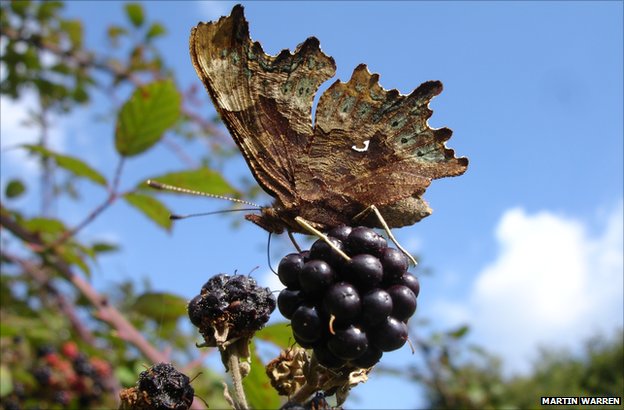
Animals like the British comma butterfly, for example, has moved 220km northward from central England to southern Scotland in the last two decades.

An uphill struggle

There is also evidence that more species seem to be moving up mountains than down, explained conservation biologist Chris Thomas from the University of York, UK, who led the study.

But studies had stopped short of showing that rising temperatures are responsible for these shifts in range, he added.

Now he and his team have made this link.

Analysing the range shifts of more than 2,000 species – ranging from butterflies to birds, algae to mammals – across Europe, North and South America and Malaysia over the last four decades, they show that organisms that experience the greatest change in temperatures move the fastest.

The team found that on average organisms are shifting their home ranges at a rate of 17km per decade away from the equator; three times the speed previously thought.

Organisms also moved uphill by about 1m a year.

“Seeing that species are able to keep up with the warming is a very positive finding,” said biologist Terry Root from Stanford University in California, US.

She added that it seemed that species were able to seek out cooler habitats as long as there was not an obstacle in their way, like a highway.

Out of range

But what about the animals that already live at the poles, or at the top of mountains?

“They die,” said Dr Thomas. Take the polar bear, it does most of its hunting off the ice, and that ice is melting – this July was the lowest ever recorded Arctic ice cover – it has nowhere to go.

However, the loss of this one bear species, although eminently emblematic, seems insignificant when compared to the number of species that are threatened at the top of tropical mountains.

On Mount Kinabalu in Borneo, Dr Thomas’ graduate student, I-Ching Chen, has been following the movement of Geometrid moths uphill as temperatures increase. Their natural ranges have shifted by 59m in 42 years.

These moths “don’t have options; they are being forced up, and at some point they will run out of land,” reflected Dr Thomas.

The British scientist said that it was really too early to start generalising about the characteristics of the species that had shifted their distribution to stay within their optimal temperature range.

“But we know that the species which have expanded the most and fastest are the species that are not particularly fussy about where they live,” he told BBC News.

:: Read original here ::

Swedish wolves threatened by under-reported poaching

Illegal poaching accounts for over half of all deaths of Swedish wolves, suggests a new study.

Basing their estimates on long-term wolf counts, the researchers reveal that two-thirds of poaching goes undetected.

The study suggests that without the past decade of persecution Swedish wolves would be four times more abundant than they are today.

The study’s findings are reported in Proceedings of the Royal Society B.

“Many have speculated that poaching levels are high for many threatened species of carnivores,” said Chris Carbone from the Zoological Society of London.

“This study presents an important step in trying to quantify this hidden threat,” he added.

The new study predicts the size of the wolf Swedish population each year based on counts from the previous year.

These counts are based on radio-tracked wolves and the more traditional ‘footprint count’, used in Sweden for over 10 years to estimate wolf numbers.

Counting canines

The researchers’ estimates took account of confirmed cases of wolf mortality – such as when a wolf is killed on the road, dies from disease or is found killed.

However, when the team, based at Grimso Wildlife Research Station in Sweden, compared the expected numbers produced by their models to the actual number of wolves in the wild, they found they were over estimating the size of the population.

Conservation biologist Guillaume Chapron, and one of the team, suspects that ‘cryptic poaching’, poaching that goes undetected, accounts for this difference.

The poaching we see is the “tip of the iceberg,” he said.

The researchers predict that without the last decade of poaching, wolves would have numbered around a thousand by 2009, four times the number reported that year.

Wolves are known to kill the dogs that many Swedes use to hunt moose, and despite up to four year prison sentence if caught poaching, a few people do not hestitate to take a shot at a wolf.

Founding fins

Poaching is not the only threat to the Swedish wolf.

These large carnivores went extinct in Sweden in the 1970s, and the population has since re-established itself after a handful of migratory Finnish wolves took over the empty territories.

Today, all 250 or so Swedish wolves have descended from these few founding individuals.

And so the population is highly inbred and suffers from skeletal abnormalities and problems reproducing.

Further reducing the number of wolves by poaching leaves this population very vulnerable to further inbreeding, explained Dr Chapron.

:: Read original here ::

Spermless mosquitoes hold promise to stop malaria

Scientists have created spermless mosquitoes in an effort to curb the spread of malaria.

Experts say that this is an important first step toward releasing sterile males into the wild to reduce the size of mosquito populations.

Malaria kills around one million people worldwide every year, and in Africa alone, accounts for 20% of all childhood deaths.

The work is reported in Proceedings of the National Academy of Sciences.

Insect sterilisation isn’t new: scientists have attempted to control the sleeping sickness-carrying tsetse fly by exposing them to radiation to render them sterile.

A similar approach has been successfully used against the potatoes weevil in Japan and the tropical screwworm that attacks cattle.

Frail fly

However, exposing mosquitoes to radiation has tended to leave male mosquitoes frail, and unable to compete in the frenzied mating aerobatics that Anopheles gambiae – the world’s most efficient malaria vector – enjoys.

Now scientists have developed an alternative route to mosquito sterility.

Entomologist Flaminia Catteruccia from Imperial College London enlisted the help of her graduate student Janis Thailayil in the search for how to make male mosquitoes sterile but leave them otherwise unharmed.

Mr Thailayil injected 10,000 mosquito embryos with tiny fragments of RNA designed to turn off a gene – called zpg – that is essential for normal sperm development.

After months of laborious work, the researchers created around 100 spermless mosquitoes, and showed that females were just as willing to mate with these males as with fertile ones.

Dr Catteruccia explains that female mosquitoes mate only once in their lives. If scientists can trick them into thinking that they have successfully mated, then they will continue to lay their eggs without knowing that they have not been fertilised.

“You [could] in principle release large numbers of sterile males over many generations… and eventually all the females will have mated with the sterile males and…you can really reduce the number of mosquitoes,” explained Dr Catteruccia.

This would gradually reduce the number of hatching mosquitoes. And hopefully help eradicate what many consider to be the single most dangerous insect species for mankind.

However, Dr Catterucci warns that this is only a proof of principle. The method her team used to create the spermless males would be far too labour-intensive to flood wild populations with enough spermless males to have any effect on their numbers.

However, knowing that females don’t notice whether they are receiving sperm or not is still an important step, she said.

:: Read original here ::

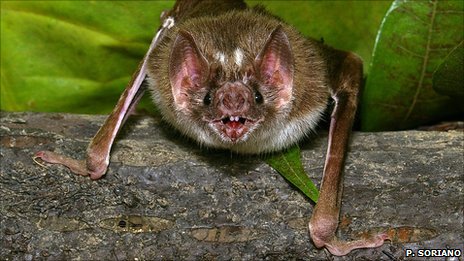
How bloodsuckers find their blood

Scientists have identified the heat-sensitive facial nerves used by vampire bats to detect their next meal.

The nerves allow bats to pinpoint where the blood flows closest to their prey’s skin so they can feed more efficiently.

Vampire bats are among a handful of animals that use infrared sensors to locate their next meal, but are unique in the way they do it.

The findings are reported in the journal Nature.

Native to Central and South America, the Common Vampire Bat, Desmodus rotundus, needs to take a sanguineous slurp every night to survive.

Researchers believe that the bats rely solely on detecting their next meal in the dark by listening out for their prey’s breathing.

Having located a prey individual the bats crawls along the ground and onto the animal.

Once atop their prey, the bats are capable of using their heat-adapted nerves in their upper lip and nose to detect blood up to 20cm under their prey’s flesh.

The new finding has pinpointed the molecule that is responsible – heat-sensitive TRPV1. TRPV1, a protein, usually helps animals detect dangerously high temperatures (those over 43 degrees C), but in the bats, some of the TRPV1 molecules have been mutated into a version that is sensitive to lower temperatures, those around 30 degrees C.

Lots of blood-sucking animals search out their next meal using heat-detecting molecules, but they all seem to do it in a different way, said bat biologist, Brock Fenton from the University of Western Ontario, who was not involved in the work.

He said that perceptual world of bats undoubtedly has many more intriguing secrets.

  • The Common Vampire Bat (Desmodus rotundus) is one of three species of vampire bat: The Hairy-legged Vampire Bat (Diphylla ecaudata), and the White-winged Vampire Bat (Diaemus youngi)
  • All three live in the Central and South America
  • D. rotundus feeds mainly on domestic animals, using its razor sharp teeth to make small (5mm) cuts in their prey – most often around the neck or vulva – and secretes an anticoagulant into the wound so it can draw enough blood to the surface
  • D. rotundus drinks its body weight in blood each night, secreting blood plasma in its urine as it feeds to lighten the load
  • Scientists have developed a anti-clotting drug from the saliva of vampire bats that could help stroke patients

:: Read original here ::

Mothers of twins ‘have heavier single babies’

Single babies born to mothers of twins tend to be heavier, report scientists.

The report in the journal Biology Letters is based on a 40-year data set collected in The Gambia.

Mothers with twins were found to give birth to heavier babies, but the study found a similar trend even among single babies born before twins.

Twin pregnancies are risky for both mothers and offspring, and the study suggests heavier, healthier single children may offset those risks.

Worldwide only 13 in 1,000 babies are born a twin, although this rate is higher in developing countries.

Researchers interested in probing the twinning question further have had to rely on the few long-term data sets collected in parts of the world where birth rates are higher, and there are therefore more twinning events.

Evolutionary biologist Ian Rickard from the University of Sheffield in the UK, saw an opportunity to do just this when he learned of a long-term data set from The Gambia, which included not only birth weights of about 1,900 babies born to around 700 mothers, but also the number of twins.

Analysing all 40 years, Dr Rickard explained that he and his Gambian and London-based colleagues saw that women who produced twins gave birth to heavier non-twin babies.

Harvesting data

The exact differences, however, depended on when those single babies were born.

The Gambia experiences regular variations in food supply, from a “harvest season” between January and June, and a “hungry season” for the rest of the year.

Single babies born during the harvest season before twins were on average 226g heavier than those from non-twinned families; those born after the twins were 134g heavier.

However, single children born into twinned families in the hungry season showed no discernible difference in average weight from those of non-twinned families.

“We’ve known for quite a while that… if a [foetus] is exposed to a period of the year between about July and October during their third trimester, they tend to have lower birth weight,” said Dr Rickard.

The assumption is that the stress of food scarcity swamps the heavier-baby effect found in the harvest season.

Producing twins, Dr Rickard suggested, could be just a by-product of natural selection acting on birth weight.

However, he stressed the “importance of replicating this [finding] in another population to see if this pattern holds up”.

He suspects that a hormone called IGF, which has long been linked to birth weight in humans, could be responsible for this pattern.

IGF is known to influence the growth rate of foetuses, and is implicated in the “polyovulation” that leads to multiple births.

In cattle, IGF levels tend to be 1.5 times higher in the cows who give birth to twins, and in mice high levels of the hormone are linked to larger litters.

:: Read original here ::

Dyslexia makes voices hard to discern, study finds

People with dyslexia struggle to recognise familiar voices, scientists suggest.

The finding is the first tentative evidence that small sounds in the human voice that vary between people are difficult for dyslexics to hear.

Writing in the journal Science, the scientists say that many people could have some degree of “voice blindness”.

And by studying it, scientists hope to better understand how the human brain has evolved to recognise speech.

Humans rely on small sounds called phonemes to tell one person from another.

As we first try to form the word dog, for example, phonemes are the “duh”-“og”-“guh” sounds that our parents prompt us to make.

But as we master the ability to read, we become less reliant on recognising these sounds to read, and eventually stop noticing them.

Despite ignoring them, however, phonemes remain important for voice recognition.

The tiny inflections in the way people pronounce phonemes gives a listener cues to tell one voice from another.

Because people who suffer from dyslexia are known to struggle with phonemes when reading, a US-based team of scientists wondered whether they might also struggle hearing them in people’s voices.

Listen well

To investigate, the team grouped 30 people of similar age, education and IQ into two camps: those with and without a history of dyslexia.

The subjects then went through a training period to learn to associate 10 different voices – half speaking English and half speaking Chinese – with 10 computer-generated avatars.

The subjects were then later quizzed on how many of those voices they could match to the avatars.

Non-dyslexics outperformed people with a history of dyslexia by 40% when listening to English.

However, this advantage disappeared when the groups were listening to Chinese.

Dorothy Bishop from the University of Oxford thinks that this is because “when [they] are listening to Chinese, it is a level playing field, because no one has learned to hear [Chinese] phonemes”.

The researchers think that dyslexics don’t have as comprehensive a phoneme sound library in their heads, and so they struggle when they hear phonemes spoken by unfamiliar voices because their “reference copy” isn’t as well-defined.

“It is a very interesting result. The only thing that I would really like to see to convince me… is if they were to repeat the experiment using Jabberwocky.”

Using Jabberwocky, the nonsense poem by Lewis Carroll, would allow the researchers to determine whether the listeners identify who’s who from the meaning of what they are saying, or whether listeners are purely relying on the phonemes.

Dr Bishop speculated that non-dyslexics may be worse at extracting the meaning of the words, meaning they under perform in this task.

Understanding the mechanics of voice recognition is important, said the study’s lead author Tyler Perrachione from the Massachusetts Institute of Technology in Cambridge, US, because it allows a listener to pinpoint a familiar voice above the hubbub of a crowded room.

Mr Perrachione explained that very little is known about voice blindness, which is formally called phonagnosia.

“In reality, phonagnosia is probably much more common,” he explained, “but people who don’t recognise that voices sound different may not even realise they lack the ability to tell voices apart.”


:: Read original here ::

Age-related brain shrinking is unique to humans

The brains of our closest relatives, unlike our own, do not shrink with age.

The findings suggest that humans are more vulnerable than chimpanzees to age-related diseases because we live relatively longer.

Our longer lifespan is probably an adaptation to having bigger brains, the team suggests in their Proceedings of the National Academy of Sciences paper.

Old age, the results indicate, has evolved to help meet the demands of raising smarter babies.

As we age, our brains get lighter. By 80, the average human brain has lost 15% of its original weight.

People suffering with age-related dementias, such as Alzheimer’s, experience even more shrinkage.

This weight loss is associated with a decline in the delicate finger-like structures of neurons, and in the connections between them.

Alongside this slow decline in its fabric, the brain’s ability to process thoughts and memories and signal to the rest of the body seems to diminish.

Researchers know that certain areas of the brain seem to fare worse; the cerebral cortex, which is involved in higher order thinking, experiences more shrinkage than the cerebellum, which is in charge of motor control.

Yet despite the universality of ageing, scientists do not fully understand why our brains experience this continuous loss of grey matter with age.

Intriguingly, the brains of monkeys do not seem to undergo the same weight loss, raising the question of whether it is a distinctively human condition.

Now, a team of neuroscientists, anthropologists, and primatologists have pooled their expertise and datasets to reveal the answer.

Comparing magnetic resonance images from more than 80 healthy humans between the ages of 22 and 88 with those of a similar number of captive-bred chimps, the researchers found that chimps’ brains do not shrink with age.

The results suggest that the estimated 5-8 million years of evolutionary history that separate chimps from humans have made all the difference in the way that the species age.

It takes a village…

Anthropologist Chet Sherwood from George Washington University in Washington DC, who led the study, thinks that humans live longer to “pay for” their larger-brained children.

Humans live relatively long compared to other great apes. The majority of this extended life is post-menopausal, while chimps are reproductively viable right up to their death.

A human brain is three times the size of chimpanzee’s.

And it is not such a stretch, Dr Sherwood suggests, to conclude that grandparents’ extended lives are in an evolutionary sense there to relieve mothers from being solely responsible for raising their big-brained, energetically costly infants.

“I say this right now, as my seven year old daughter is being looked after by my mother,” he told BBC News.

“Because neurons cannot regenerate, aging, he thinks, is just the stress of living long enough to lend a helping hand to some relatives.”

“[The study] provides very good evidence that the patterns of brain ageing in humans are quite different from other animals,” commented neuroscientist Tom Preuss from Emory University in Atlanta, US, who was not involved in the research.

However, Dr Preuss was clear that these differences do not make other animals useless as models for studying age-related diseases.

Instead, the differences could help to explain why humans suffer more from these diseases than other animals seem to.

:: Read original here ::