Worms’ sex life yields advantage over parasites

Sex gives worms the power to fight off parasites, report researchers this week in the journal Science.

Worms forced to reproduce asexually succumbed to a nasty bacterial infection and died.

The researchers say the results are the most convincing evidence to date for a key theory in evolutionary biology.

The theory holds that sex evolved because it lets organisms reshuffle their genes into new combinations to stay a step ahead of parasites.

Sex has long troubled evolutionary biologists.

Reproducing asexually – where organisms clone themselves – makes much more sense; there is no need for an organism to search and seduce a mate, fight off competitors, or risk contracting a sexually transmitted disease.

What is more, given that an organism has survived long enough to reproduce, it is likely to have a first-rate set of genes under its pelt.

Why run the risk of diluting these good genes with potentially poorer ones from another organism?

And yet sex exists; the vast majority of animals and plants reproduce this way.

Fluctuating futures

Parasites, many biologists believe, might be the answer.

Parasites create a situation where, in spite of the disadvantages of sex, it is good for an organism to reshuffle its genome with that of another.

This reshuffling creates offspring with new gene combinations that are potentially better than older combinations at resisting a parasite’s advances.

The genetic “arms race” between a parasite and its host is often refered to as an example of Red Queen-style interaction – a term coined by biologist Leigh Van Valen who summoned the image of the constantly running Red Queen from Lewis Caroll’s Through the Looking-Glass.

The analogy seemed to him fitting for describing how species must continually evolve to keep up with each other.

But despite the theory’s popularity, there has been little hard evidence for it.

Out in the field, biologists have noted that organisms are more likely to reproduce sexually when there are more parasites loping around in their vicinity.

What has been missing is a direct manipulation to organisms’ sex lives to test if it makes them more or less resistant to parasites.

Direct evidence

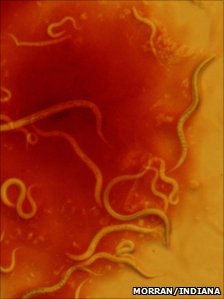
Now researchers working at Indiana University in the US have used the round worm Caenorhabditis elegans to do just this.

The team engineered two types of worms – some that could only reproduce by having sex, and some that could only clone themselves.

The researchers watched the worms gorge themselves on a lawn of a nasty bacterium, Serratia marcescens, which invades the worms’ guts and from there multiplies into every crevice of their body, killing the worms from the inside.

Across five different populations, worms that reproduced sexually fared well over the 20 generations, while all animals that cloned themselves died quickly.

Testing theory

“What is really beautiful about these lab systems is that you can manipulate the system and show that [the theory] can work,” said evolutionary biologist Aneil Agrawal from the University of Toronto in Canada.

Dr Agrawal described the experiment as “elegant” because it allowed the researchers to demonstrate that it was not simply the presence of the parasite that spelled the end for the cloners, but the presence of a parasite that had co-evolved alongside the worms.

To do this, the team created two treatments: one used bacteria from an original stock kept in the freezer, and the other used bacteria that had lived alongside the worms for many generations and so had adapted along with them.

Clonally doomed

In essence, “the bacteria got more and more infective, but the [clonal worms] did not get more and more resistant, and that is why they went extinct,” explained lead author Levi Morran, an evolutionary biologist from University of Indiana in the US.

“I am really excited about this; I think this is really cool,” Dr Agrawal told BBC News.

“Whether this is actually happening in nature is another thing; we can’t know that from a lab system,” he explained.

But he adds that as a first step it is important to demonstrate that under conditions where you expect sex to alleviate the effects of parasites, it does.

:: Read original here ::

Dinosaurs were animal world’s top bone heads

Scientists have compared a dinosaur with several modern-day animals to settle who wins the heavy-weight head-butting title.

The new findings confirm that the ancient bipedal dinosaur Stegoceras could knock out any of today’s top head-butters.

Stegoceras probably used their domed skulls to ram each other over access to fertile females.

The hard-hitting research was published in the journal PLoS ONE.

Stegoceras was a member of the leaf-eating genus Pachycephalosauria that roamed the Earth around 70 million years ago.

The goat-sized dinosaur supported a 7.5cm (~3 inches) thick bony skull, which some palaeontologists believe acted as a shock-absorber when these animals ran at each other.

Big hitters

However, images of the insides of Stegoceras‘ fossilised skull, which reveal two layers of dense bone that encase a spongy sinus held apart by tiny struts, has led some scientists to doubt this interpretation.

Hoping to clear up the controversy, biomedical engineer Dr Eric Snively wandered down the corridor at the University of Calgary in Alberta, Canada to enlist the help of colleague Dr Jessica Theodor, a vertebrate palaeontologist.

The duo performed computer tomographic (CT) scans on the skulls of Stegoceras, along with a variety of modern animals, and used these bone density measurements to create 3D models of the animals’ heads.

The team was then able to exert virtual stresses to test how the different skulls held up.

Compared to some of today’s big hitters, such as the Northern American bighorn sheep, the Arctic musk ox and African duiker, Stegoceras ‘ head was able to withstand the most stress.

“The argument that they couldn’t withstand the forces of head-butting seems to have been refuted by this evidence,” said Dr Theodor.

Crushing collisions

Dr Snively explained that if two animals ran at each other with a combined speed of 6.7 metres (22 feet) per second, which he estimates to be a realistic speed, Stegoceras‘ dome-head would have had to withstand an impact of over 13,000 Newtons (2,918 pounds-force).

“In human terms, that’s like balancing a Ford Focus on your head,” Dr Snively told BBC News.

“Even at these forces, only a few struts of bone might break; these would heal easily,” he said.

Offering further protection from these crushing collisions, Stegoceras‘ head was covered by a layer of keratin, the material nails are made from, and articulations between the vertebrae would have let the “backbone scrunch up like an accordion”, explained Dr Snively.

:: Read original here ::

Researchers switch on genes with blue pulse

Scientists have developed a technique that could be used to deliver precise doses of hormones to people who don’t make them naturally.

To do this, they rewired kidney cells with light-sensitive molecules from the eye, they reported in the journal Science.

When pulsed with blue light, these cells churned out proteins on demand.

Ultimately, this technique could avoid the need for people with diabetes to inject themselves regularly.

“When I speak to diabetes patients they say that if you could take away always having to inject themselves it would really increase their quality of life,” said lead author Martin Fussenegger, a bioengineer of the Swiss Federal Institute of Technology, Zurich.

Dr Fussenegger thought he saw a solution in his own field of optogenetics. Optogenetics, as the name suggests, uses light to control the behaviour cells.

To get a cell to respond to light you first have to rejigger it so it has a light-sensitive molecule on its surface. Dr Fussenegger coaxed kidney cells to express melanopsin, a molecule usually found in animals’ eyes.

Blue genes

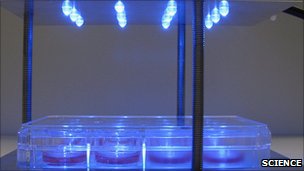
He then placed these cells into diabetic mice. Along with the cells he placed an optic fibre, down which he could pulse blue light to expose the cells at his command.

In the dark, these cells behaved as usual; In the light, however, genes in the cell were switched on and the cell pumped out a protein required for the breakdown of sugars in the blood, helping the mice to control their glucose levels.

He hopes that cells like these could ultimately be implanted into people, and exposed to light – either through the skin or down a optic fibre – to release proteins that would help treat diabetes.

The new technique is a proof of principle. He told BBC News that it was not limited to treating diabetes; this technology could be usedto switch on genes to produce many different proteins in people who do not make them naturally, or are not making enough of them to be healthy.

Light switch

“I think this is a phenomenal research tool,” said James Collins, a synthetic biologist at Howard Hughes Medical Institute, Maryland, US, who was not involved in the work.

Dr Collins explained that as we move into an age of regenerative medicine, and begin to think of how we use stem cells to produce different tissues in the body, one of the challenges will be to work out which genes are needed to produce certain tissues and cells.

This new technique allows researchers to switch genes on and off to determine which are essential to make a specific tissues.

:: Read original here ::

Early human fossils unearthed in Ukraine

Ancient remains uncovered in Ukraine represent some of the oldest evidence of modern people in Europe, experts have claimed.

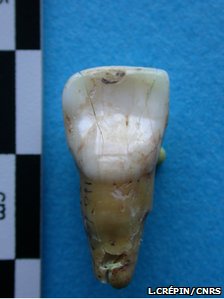
Archaeologists found human bones and teeth, tools, ivory ornaments and animal remains at the Buran-Kaya cave site.

The 32,000-year-old fossils bear cut marks suggesting they were defleshed as part of a post-mortem ritual.

Details have been published in the journal PLoS One.

Archaeologist Dr Alexander Yanevich from the National Ukrainian Academy of Science in Kiev discovered the four Buran-Kaya caves in the Crimean mountains in 1991.

Since then, roughly two hundred human bone fragments have been unearthed at the site.

Among the shards of human bones and teeth, archaeologists have found ornaments fashioned from ivory, along with the abundant remains of animals.

The artefacts made by humans at the site allowed archaeologists to tie the ancient people to a cultural tradition known as the Gravettian.

This culture came to span the entire European continent and is named after the site of La Gravette in France, where this stone age culture was first studied.

Researchers were able to directly date the human fossils using radiocarbon techniques. The shape and form of the remains told the scientists they were dealing with modern humans (Homo sapiens sapiens).

Eastern promise

One thing that intrigued researchers was the scarcity of human long bones (bones from the limbs) in the caves.

The site yielded countless limb bones from antelope, foxes and hares.

But the human remains consisted of vertebrae, teeth and skull bones no larger than 12cm.

What is more, the positions of cut marks found on the human fragments were distinct from those found on the animal bones.

And while the bone marrow had been removed from butchered animals, it had been left alone in the case of the human remains at the site, explained co-author Sandrine Prat from the French National Centre for Scientific Research (CNRS) in Paris.

She suspects this demonstrates that human bones were processed differently from those of animals. Human flesh was removed as part of ritual “cleaning”, not to be eaten.

Defining culture

The finds offer anthropologists a glimpse into a very early and important human culture, said Professor Clive Finlayson, an evolutionary ecologist and director of the Gibraltar Museum.

“Gravettian culture is the culture that defines modern humans.

“These people had knives, lightweight tools, open air camps, they used mammoth bones to make tents,” he said, adding that this was the earliest example of the Gravettian cultural tradition.

Professor Finlayson said that uncovering evidence of this culture in Ukraine gave weight to the idea that early modern people spread into Europe from the Russian plains, not north through the Balkans from the Middle East.

“What has excited me is that we have found evidence of humans where I would expect them to be, exploiting foods that I would expect them to be exploiting,” Professor Finlayson told BBC News.

:: Read more here ::

Scientists to sequence thousands of insect genomes

Thousands of insects are being lined up to have their genomes sequenced.

The five-year project will help researchers pinpoint vulnerable regions of insects’ genomes, which could be targeted with pesticides.

The project’s leaders hope the initiative will make a dent in the $50bn spent globally each year to control diseases transmitted by insects.

The final list of six-legged critters has yet to be finalised.

The project, called the 5000 Insect and Other Arthropod Genome Initiative, comes at a time when the costs of genome sequencing have fallen substantially and it is feasible to cheaply sequence large numbers of animals and plants.

Handfuls of bugs

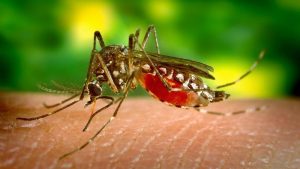
Among the list of agriculturally important insects and other arthropods – animals with exoskeletons – to be sequenced are handfuls of bugs that act as disease vectors.

By comparing the genomes of these insects with those of their close relatives that don’t carry pathogens, researchers hope to pinpoint the genes that make one insect a disease-vector and another not.

What’s more, knowing the genes involved will help researchers better predict how insect immune systems will evolve in response to biopesticide control measures, such as Beauveria bassiana, a fungus used to control mosquitoes in malaria-ridden countries in Africa.

It is also hoped that the project will aid the search for suitable compounds for use as pesticides; ones that kill a targeted pest but leave the beneficial pollinating insects that also visit the crop plants unharmed.

:: Read original here ::

Powerful cosmic blast as black hole shreds star

Astronomers have spied a star’s swan song as it is shredded by a black hole.

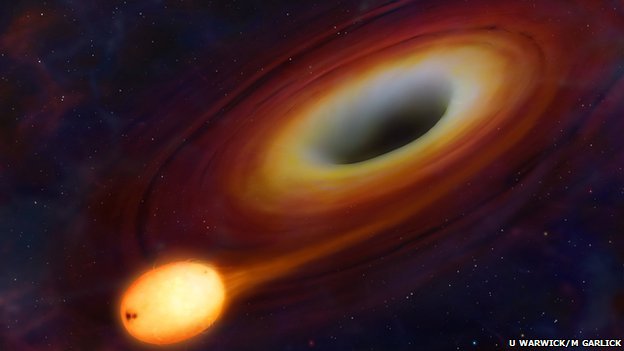
Researchers suspect that the star wandered too close to the black hole and got sucked in by the huge gravitational forces.

The star’s final moments sent a flash of radiation hurtling towards Earth.

The energy burst is still visible by telescope more than two-and-a-half months later, the researchers report in the journal Science.

The Swift spacecraft constantly scans the skies for bursts of radiation, notifying astronomers when it locates a potential flare.

These bursts usually indicate the implosion of an ageing star, which produces a single, quick blast of energy.

But this event, first spotted on 28 March 2011 and designated Sw 1644+57, does not have the marks of an imploding sun.

What intrigued the researchers about this gamma ray burst is that it flared up four times over a period of four hours.

Astrophysicist Dr Andrew Levan from the University of Warwick, and his colleagues suspected that they were looking at a very different sort of galactic event; one where a passing star got sucked into a black hole.

The energy bursts matched nicely with what you might expect when you “throw a star into a black hole”, Dr Levan told BBC News.

Gasless centres

Black holes are thought to reside at the centres of most major galaxies. Some black holes are surrounded by matter in the form of gas; light is emitted when the gas is dragged into the hole. However, the centres of most galaxies are devoid of gas and so are invisible from Earth.

These black holes only become visible when an object such as a star is pulled in. If this happens, the star becomes elongated, first spreading out to form a “banana shape” before its inner edge – orbiting faster than the outer edge – pulls the star into a disc-shape that wraps itself around the hole.

As material drops into the black hole it becomes compressed and releases radiation that is usually visible from Earth for a month or so.

Events like these, termed mini-quasars, are incredibly rare – researchers expect one every hundred million years in any one galaxy.

The researchers used some of most powerful ground-based and space-based observatories – the Hubble Space Telescope, the Chandra X-ray Observatory and the Gemini and Keck Telescopes.

:: Read original here ::

Images capture moment brain goes unconscious

For the first time researchers have monitored the brain as it slips into unconsciousness.

The new imaging method detects the waxing and waning of electrical activity in the brain moments after an anaesthetic injection is administered.

As the patient goes under, different parts of the brain seem to be “talking” to each other, a team told the European Anaesthesiology Congress in Amsterdam.

But they caution that more work is needed to understand what is going on.

The technique could ultimately help doctors pinpoint damage in the brains of people suffering from stroke and head injury.

“Our jaws just hit the ground,” said anaesthesiologist Professor Brian Pollard from Manchester Royal Infirmary on seeing the images for the first time.

“I can’t tell you the words we used as it wouldn’t be polite over the phone.”

Although regions of the brain seem to be communicating as “consciousness fades”, Professor Pollard cautions that it is early days and that he and his team from the University of Manchester still have many brain scans to analyse before they can say anything conclusive about what is happening.

The finding supports a theory that is championed by Professor Susan Greenfield, from the University of Oxford, that unconsciousness is a process by which different areas of the brain inhibit each other as the brain shuts down.

The new technique, called Functional Electrical Impedance Tomography by Evoke Response (fEITER), is more compact than other brain imaging techniques, such as functional magnetic resonance imaging (fMRI), and so is easily transported into the operating theatre.

It involves attaching tens of electrodes to the patient’s head, which send low electrical currents through the skull. The currents are interrupted by the brain’s tissues and electrical signals.

Professor Pollard explained that the brain’s structures should not change over a minute-long scan, and so any differences that he and his team see as the patient falls asleep must therefore be due to changes in their brain’s activity.

It is hoped that this technique could be used to learn about the nature of consciousness, but it is also likely to help doctors make headway in monitoring the health of a person’s grey matter after they have suffered a head injury or stroke.

:: Read original here ::

Climate to wreak havoc on food supply, predicts report

Areas where food supplies could be worst hit by climate change have been identified in a report.

Some areas in the tropics face famine because of failing food production, an international research group says.

The Climate Change, Agriculture and Food Security (CCAFS) predicts large parts of South Asia and sub-Saharan Africa will be worst affected.

Its report points out that hundreds of millions of people in these regions are already experiencing a food crisis.

“We are starting to see much more clearly where the effects of climate change on agriculture could intensify hunger and poverty,” said Patti Kristjanson, an agricultural economist with the CCAFS initiative that produced the report.

A leading climatologist told BBC News that agriculturalists had been slow to use global climate models to pinpoint regions most affected by rising temperatures.

This report is the first foray into the field by the CCAFS initiative. To assess how climate change will affect the world’s ability to feed itself, CCAFS set about finding hotspots of climate change and food insecurity.

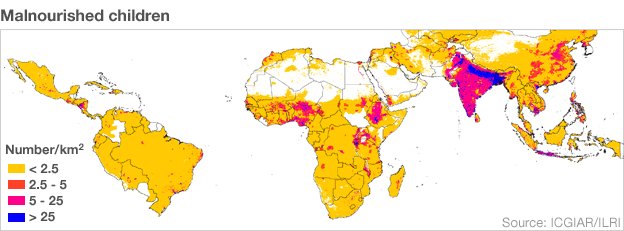
Focusing their search on the tropics, the researchers identified regions where populations are chronically malnourished and highly dependent on local food supplies.

Then, basing their analysis on the climate data amassed by the United Nations Intergovernmental Panel on Climate Change (IPCC), the team predicted which of these food-insecure regions are likely to experience the greatest shifts in temperature and precipitation over the next 40 years.

Mapping hunger

By overlaying the maps, the team was able to pinpoint which hungry regions of the tropics would suffer most.

With many areas in Africa predicted to become drier, countries such as South Africa which predominately farm maize have the option to shift to more drought resistant crops.

But for countries such as Niger, in western Africa, which already supports itself on very drought resistant crop varieties, like sorghum and millet, there is little room for manoeuvre, explains Bruce Campbell, the director of CCAFS.

“West Africa really stands out as problematic. Burkina Faso, Niger, Mali. They are already dependent on sorghum and millet.

“In many places in Africa you are really going to need [a] revolution in farming systems,” he says.

“We need everything we can lay our hands on,” said Sir Gordon Conway, professor of international development at Imperial College London.

Governments are aiming to limit the average increase in temperature to 2C by the end of the century, he explained. But if temperatures continue to follow their current trajectories “we are on for a 3-4C increase”, Sir Gordon explained.

If this was correct “things get very alarming”, the professor said.

Professor Martin Parry, a visiting professor at the Centre for Environmental Policy at Imperial College London, who co-chaired one of the working groups in the IPCC’s last climate assessment, responded to the report by saying he thought that CGIAR, the parent body to the CCAFS, had been slow to move into the field of climate change as a key area of research. But he added that this step was very welcome.

But he cautioned: “This gives us a better local picture of where the most vulnerable areas might be… but it doesn’t make strong enough connections between the changes in the weather and its impacts on yields.”

This made it difficult to plan for adaptations, Professor Parry told BBC News.

:: Read original here ::

Deepest-living land animal found

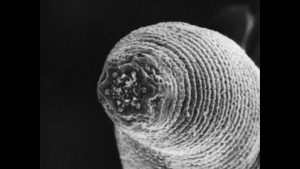
Worms have been found living at depths in the Earth where it was previously thought animals could not survive.

Discovered in South African mines, the roundworms can survive in the stifling 48C (118F) water that seeps between cracks 1.3km beneath the Earth’s crust.

The find has surprised scientists who, until now, believed only single-celled bacteria thrived at these depths.

Writing in the journal Nature, the team says this is the deepest-living “multi-cellular” organism known to science.

The researchers found two species of worm. One is a new species to science, which the scientists have named Halicephalobus mephisto after Faust’s Lord of the Underworld.

The other is a previously known roundworm known as Plectus aquatilis.

Until now, only single-celled organisms, like bacteria and fungi, have been recovered from kilometres beneath the Earth’s crust. The lack of oxygen is thought to stymie attempts by anything larger to make its home there.

But this has not stopped scientists looking.

Impossible depths

The Earth’s subterranean world is only accessible to researchers in a handful of places worldwide where ore-mining requires drilling to reach depths of more than 3km.

Taking advantage of two such sites – the Beatrix and Driefontein gold mines in South Africa – the international team of researchers placed filters over the mines’ bore-holes through which thousands of litres of groundwater pour.

From these samples they usually recover only bacteria; so the worms were a surprise.

“It scared the life out of me when I first saw them moving,” said geo-microbiologist Dr Tullis Onstott of Princeton University in New Jersey, US.”They look like black little swirly things,” he added.

These worms seem capable of surviving in very low levels of oxygen – at 1% of the levels found in most oceans, explained Dr Onstott.

But how did the worms get there?

The water in which the worms were found is between 3,000 and 10,000 years old, and so it is unlikely that the researchers brought the worms with them into the mines.

An ancient seep

The scientists, for now, believe that the animals originally came from the surface but got washed down into the cracks in the Earth’s crust by ancient rainwater.

Dr Gaeten Borgonie, a member of research team, explained that he thinks the animals look very much like the tiny worms that live in rotting fruit and soil at the surface, and probably descended from them.

Worms at the surface experience great extremes of temperature and can survive being frozen and thawed, dehydrated and re-hydrated, he told BBC News.

Dr Borgonie believes that worms already have some of the “attributes necessary” to survive at these great depths. So it wasn’t a surprise to him that the first multicellular organism to be found in the deep subsurface of the Earth was a worm.

The authors of the study expect to find other multicellular animals far beneath our planet’s surface, and are preparing to descend again to search for others.

:: Read original here ::